Winter Solstice Celebratory Meal
This year our end of the year social event took a slightly different form from that of other years. Instead of meeting for a meal after one of our weekend walks we chose to celebrate the winter solstice and the lengthening of the days. Thursday was not the shortest day; this role was taken by Friday 22nd December which was one second shorter than Thursday! Thursday 21st December was the chosen date as this was the closest evening to the winter solstice. The winter solstice, when the Earth’s axis is pointed furthest from the sun, occurred at 03:27 on Friday 22nd December but a meal on the evening of the 21st December seemed an appropriate time to celebrate – or perhaps any excuse would suffice!
(See notes at the end of this article for more information about the winter solstice)
We chose to dine at Slanj as the venue is well liked by our group, the staff are always friendly and accommodating and it is accessible by public transport.
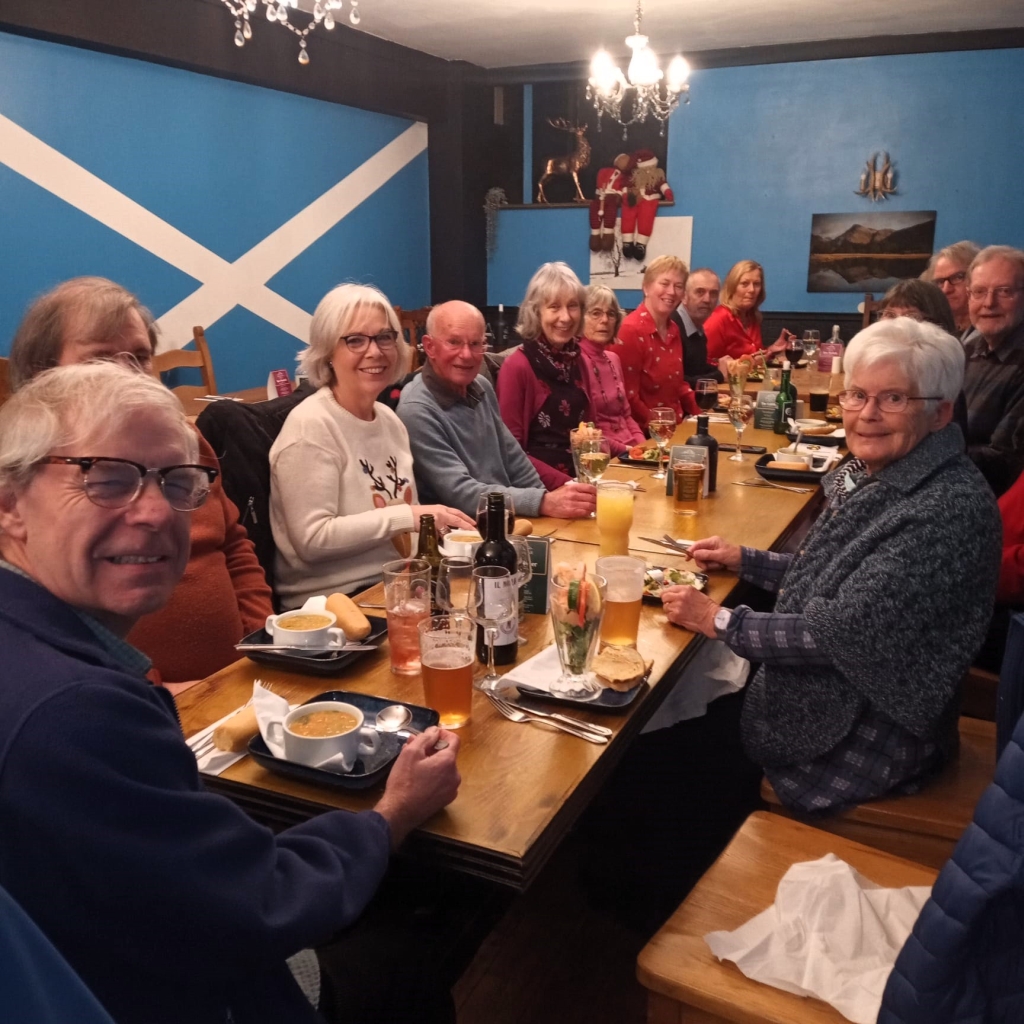
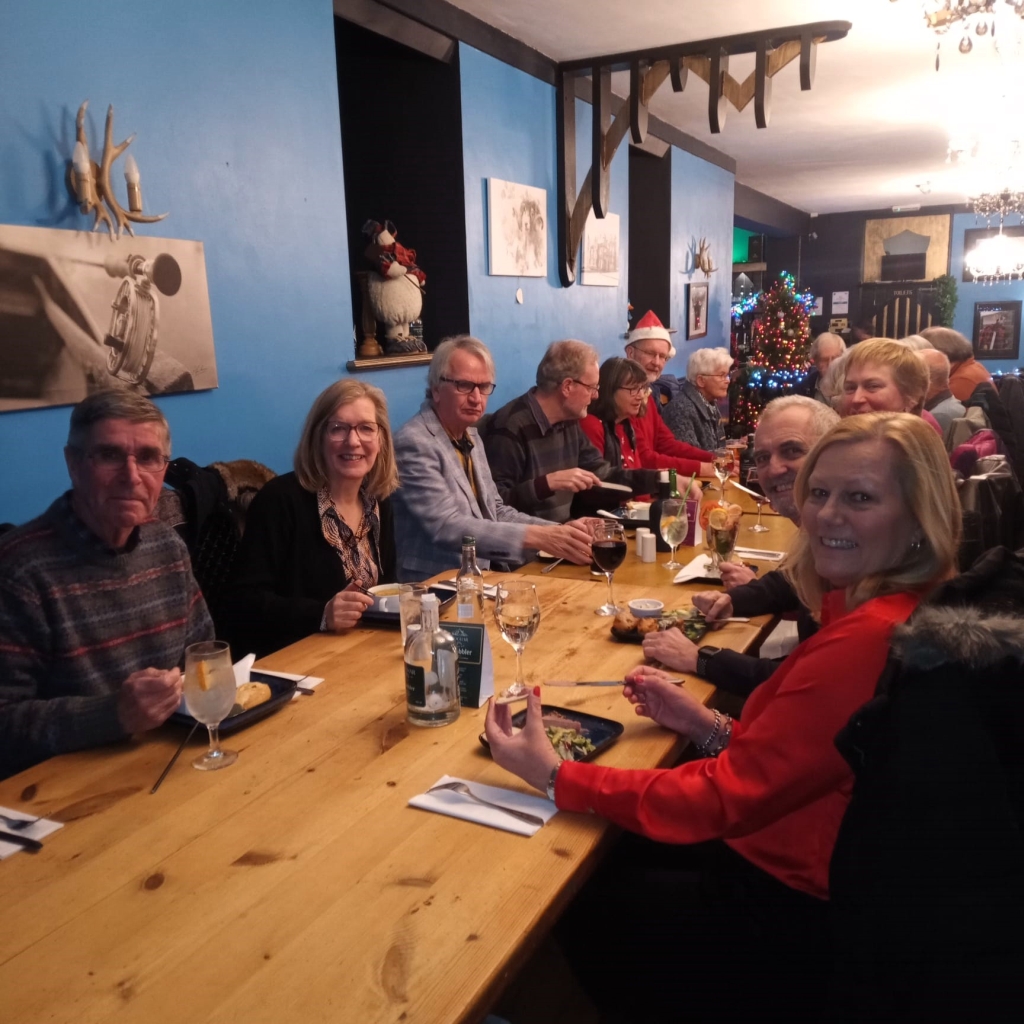
Twenty of us arrange to meet for the meal although unfortunately three had to cancel and could not attend the meal. This was balanced by one member who had not booked to attend the meal but arrived with the rest of us. The staff at Slanj accommodated this addition without any problem or complaint.
We had expected most people would travel by train but the day before our meal, we heard that trains on the West Highland Line were cancelled due to the forecast of high winds and excessive rainfall. A few hasty WhatsApp messages and six of the group offered to drive to Slanj. Due to numbers, only five of the drivers were required but the offers to drive were much appreciated.
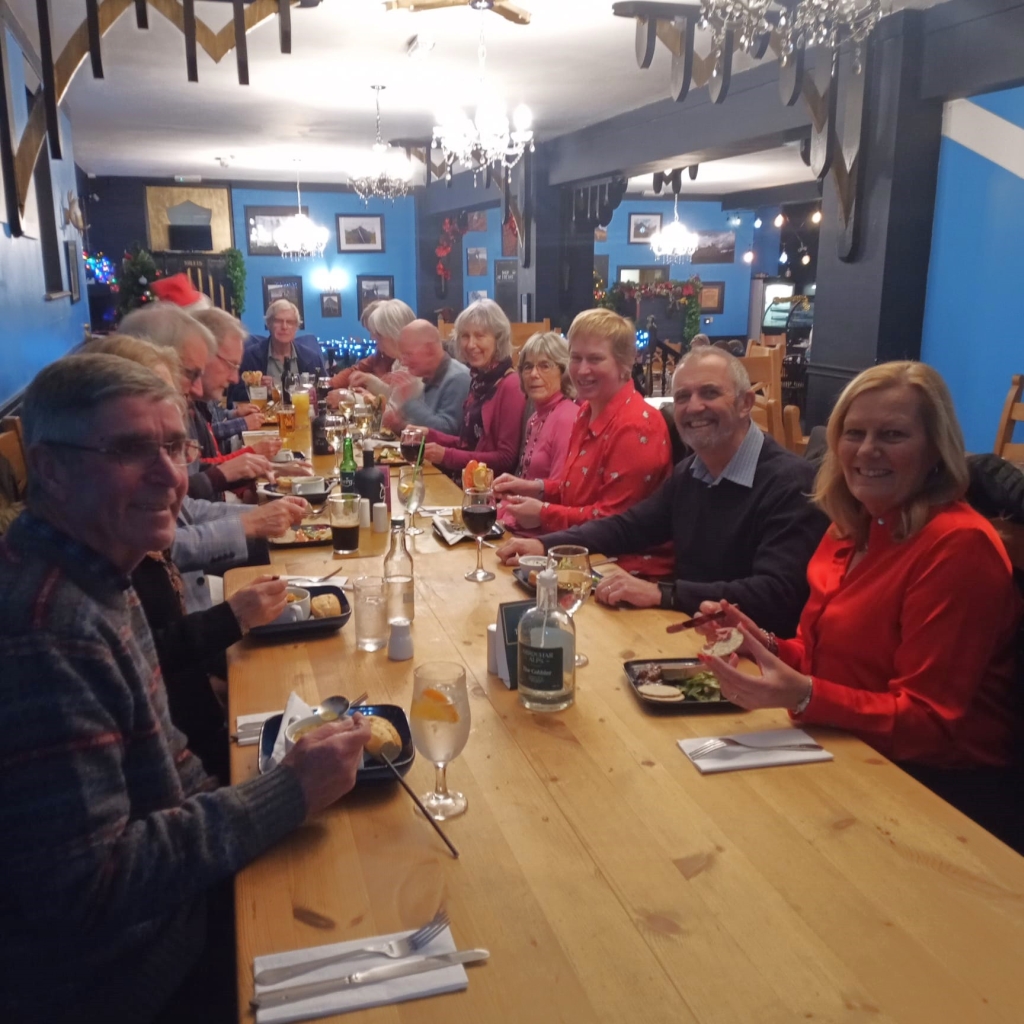
As would be expected the arrangements at Slanj were very efficient and the staff supplied drinks and served the meal faultlessly. Slanj had arranged for all eighteen of us to sit at one table which worked very well. Most of us managed to eat all three courses although some were struggling towards the end of the meal because the food was not only delicious it was also plentiful.
Because we were not relying on a train to take us back to Helensburgh and Dumbarton, we were able to stay longer than would otherwise have been the case but we eventually took our leave of the staff at Slanj and headed home at about 20:30.
Everyone had enjoyed their meal and were very contented, if full, as we returned home. Several of us were starting to think about our next formal meal. The astronomical calendar offers a great deal of scope. The summer solstice is an obvious opportunity but there are also the two equinoxes to consider or if we wish to be particularly greedy / sociable there are thirteen new moons to celebrate.
This was another great meal and a big “Thank you” to the staff at Slanj.
Some facts about the winter solstice
The word solstice is derived from the Latin, solstitium, meaning "sun standing still". During the days around the winter solstice, the sun’s height above the horizon at noon remains almost constant and was believed to be standing still.
The Northern Hemisphere winter solstice occurs when the North poles reaches its maximum tilt (23.40) away from the Sun.
It is the moment during the year when the path of the Sun in the sky is farthest south in the Northern Hemisphere (December 21 or 22) and the Sun travels the shortest path through the sky. Consequently, that day has the least daylight and the longest night.
On the day before or after the winter solstice your shadow, at noon, will be the longest shadow you cast the entire year.
After the solstice, the days get longer, and has justifiably been celebrated in many cultures throughout the world as a time of rebirth.
According to the astronomical definition of the seasons, but not meteorological definition, the winter solstice also marks the beginning of the season of winter, which lasts until the vernal equinox (March 20 or 21 in the Northern Hemisphere. (The meteorological definition of winter is the months December, January and February).
Finally, two more photographs of our meal