
A visit to some historic monuments in Paisley
After our walk at Gleniffer Braes on 3rd December 2022 we viisted Paisley where our leader had kindly agreed to show us a few notable statues and memorials.
Our first visit was to the Woodside Cemetery where the martyrs James Algie and John Park were buried. James Algie and John Park were executed in 1685 for refusing to swear an oath renouncing the Covenant and accepting the King’s supremacy in all civil and religious matters.
We remained in Woodside Cemetery and visited the 1820 Martyrs’ Monument. This commemorates Andrew Hardie, John Baird and James Wilson who were executed after the Radical War of 1820 (also known as the Scottish Insurrection).
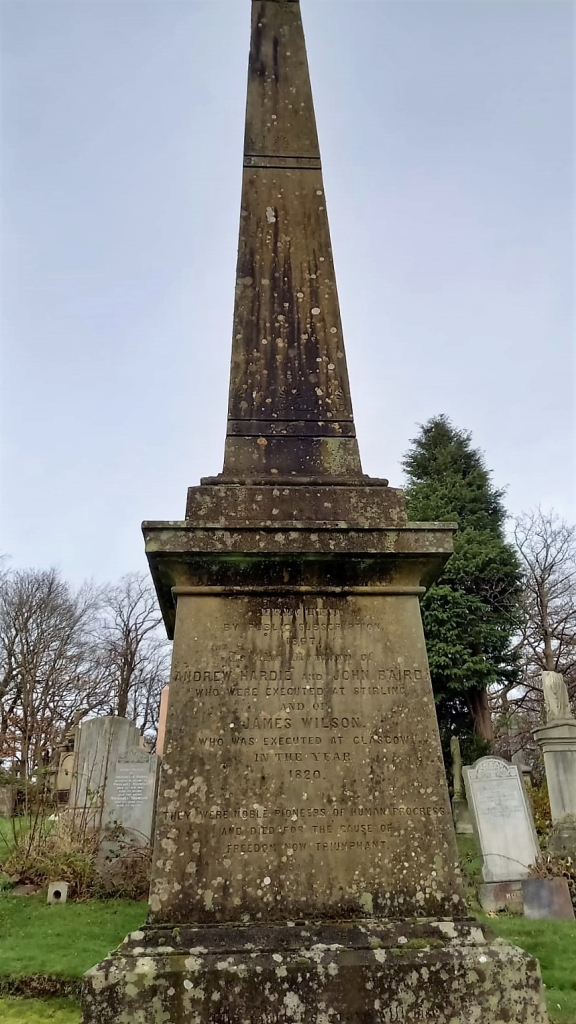
1820 Martyrs’ Monument
After a short walk we arrived at Robert Tannahill’s cottage. Paisley poet, Robert Tannahill (1774 – 1810), had lived here all his life. The cottage is home to the Paisley Burns Club and contains a display of Tannahill and Burns memorabilia. Unfortunately, it is not open to the public.
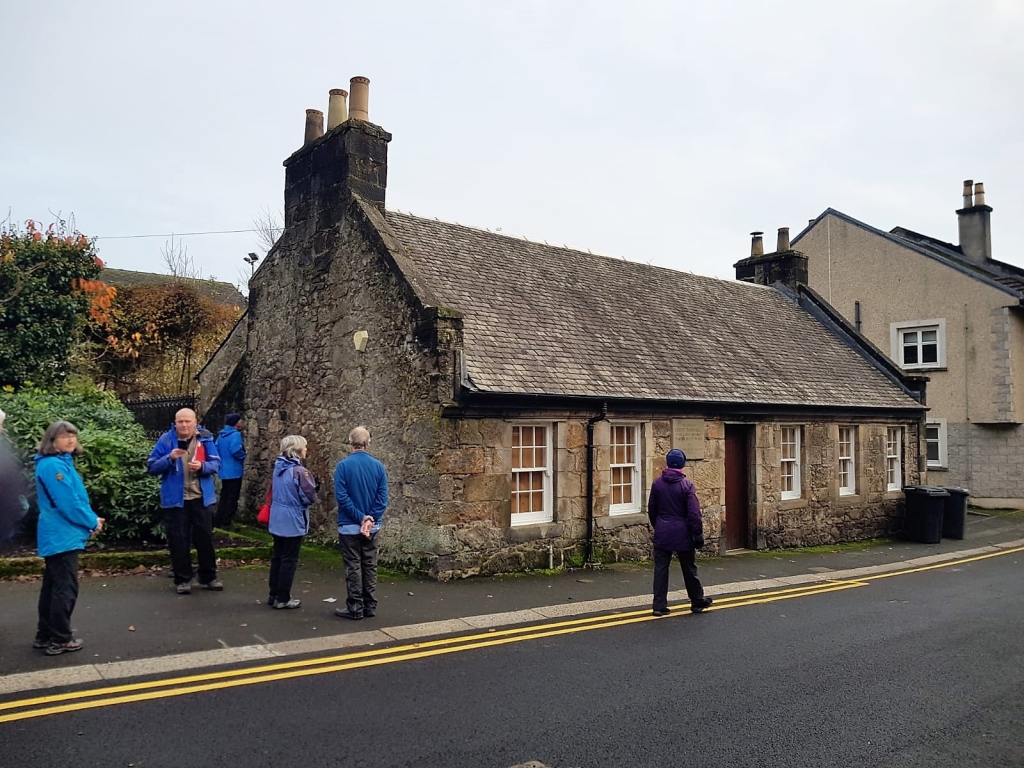
Robert Tannahill’s Cottage
Our next stop was at the memorial to May Donoghue. May secured a lasting place within the annals of the law, after what became known as the ‘snail in the bottle’ or Donoghue v Stevenson legal case and resulted in the negligence laws (duty of care) being changed around the world.
In 1928 May visited a Paisley café where she was served a bottle of ginger beer contaminated by a dead snail. The tainted drink caused her severe illness and discomfort. She took the drink manufacturers, Stevensons, to court and although her case was initially dismissed by the Scottish Court of Session she persevered and eventually won her case at the House of Lords in 1932.
The sculpture depicts May with her two granddaughters and was installed in 2018.
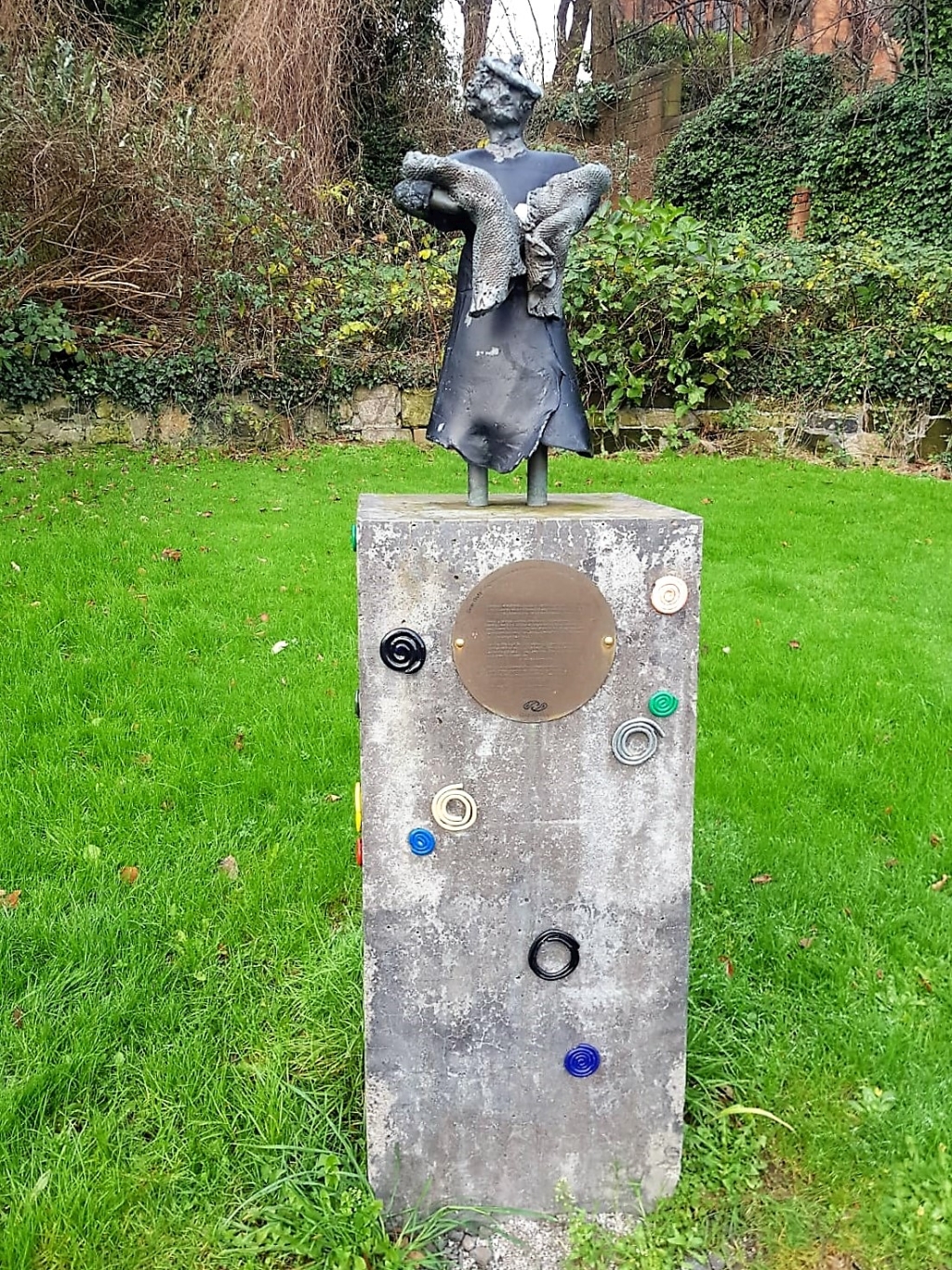
May Donoguhy’s Memorial
Passing the famous Thomas Coats Memorial Church, built in the Gothic Revival style from red sandstone and an open crown steeple we arrived at the John Witherspoon statue outside the modern buildings of the Paisley campus of the University of the West of Scotland.
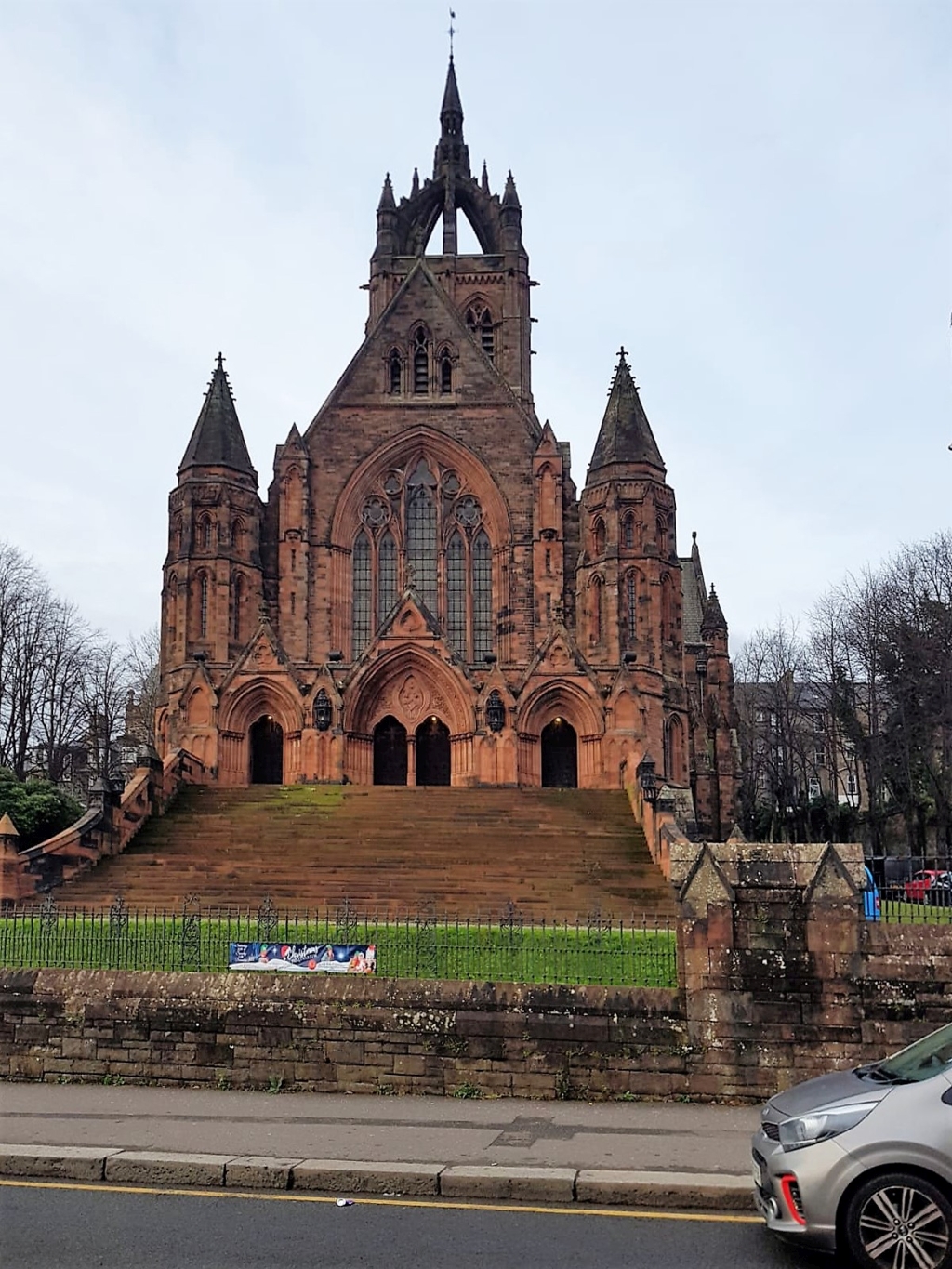
Thomas Coats Memorial Church
John Witherspoon (1723 – 1794) was a clergyman, educator, and founding father. He also served as Princeton University’s sixth president. His connection with Paisley was due to being minister of the Laigh kirk from 1758 to 1768 but he emigrated to New Jersey in 1768 to take up a post at the Presbyterian College of New Jersey in Princeton – later to become Princeton University. A man of many contradictions his most complex relationship was with slavery. He owned slaves and at one point arguing that in terms of taxation they should be treated on par with horses. He made the quote “It has been objected that negroes eat the food of freemen & therefore should be taxed. Horses also eat the food of freemen; therefore they also should be taxed” made while drafting the Articles of Confederation in 1777. Offset against this was that he personally educated several free Africans and African Americans while in Princeton. Although while working in Beith he baptized a slave from Virginia he made it clear the baptism would not emancipate him but would “free him of sin” not “from slavery”.
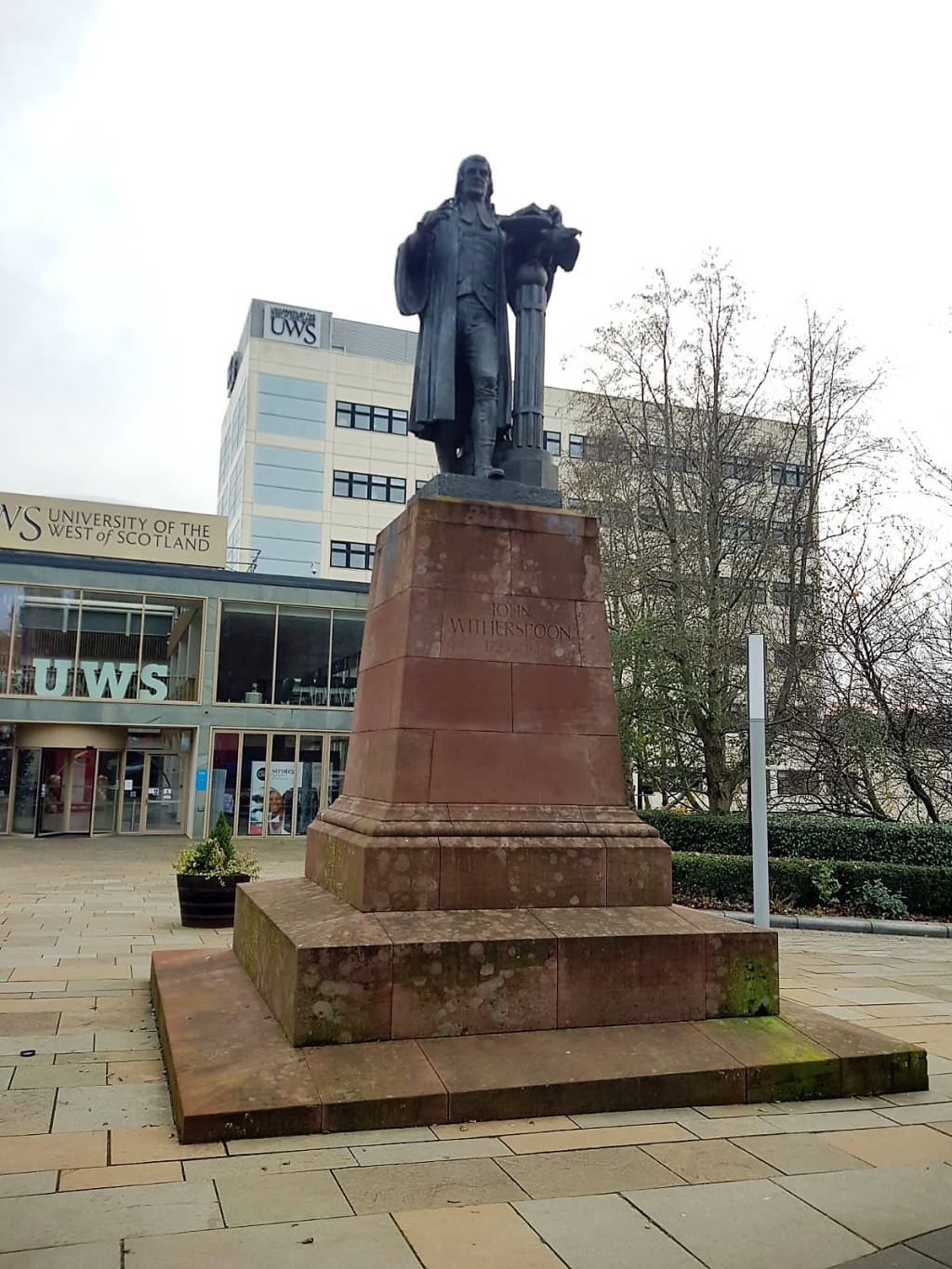
John Witherspoon statue
Moving away from the controversial statue of John Witherspoon we arrived at a memorial to the Glen Cinema tragedy of 1929. On the afternoon of 31 December 1929, during a children’s matinee, a film put in its metal box began to issue thick black smoke. The smoke filled the auditorium containing between 600 - 1000 children. Panic set in. Children ran downstairs so fast and, in such numbers, that they piled up behind the exit doors. These doors could not be opened as they were locked but even after police had broken the locks they couldn’t be opened as they opened inwards. The crush of children and bodies prevented the doors being opened. Tragically 71 children died and between 30 and 40 were injured. The incident remains the worst cinema disaster in British history. The irony was, there was no actual fire.
The memorial entitled "Rattle/ Little Mother" in Dunn Square was commissioned for the 90th anniversary of the tragedy. It was designed with input from the two remaining survivors and their families. The sculpture is designed to be playful yet serious and yet my personal feeling was that it trivialised a tragic event. Fortunately, a more sombre, serious, memorial is present in Hawkhead Cemetery.
The Glen Cinema never re-opened after the tragedy but the distinctive building remains in use as mixed office and retail space. It is designated as a Grade B listed building.
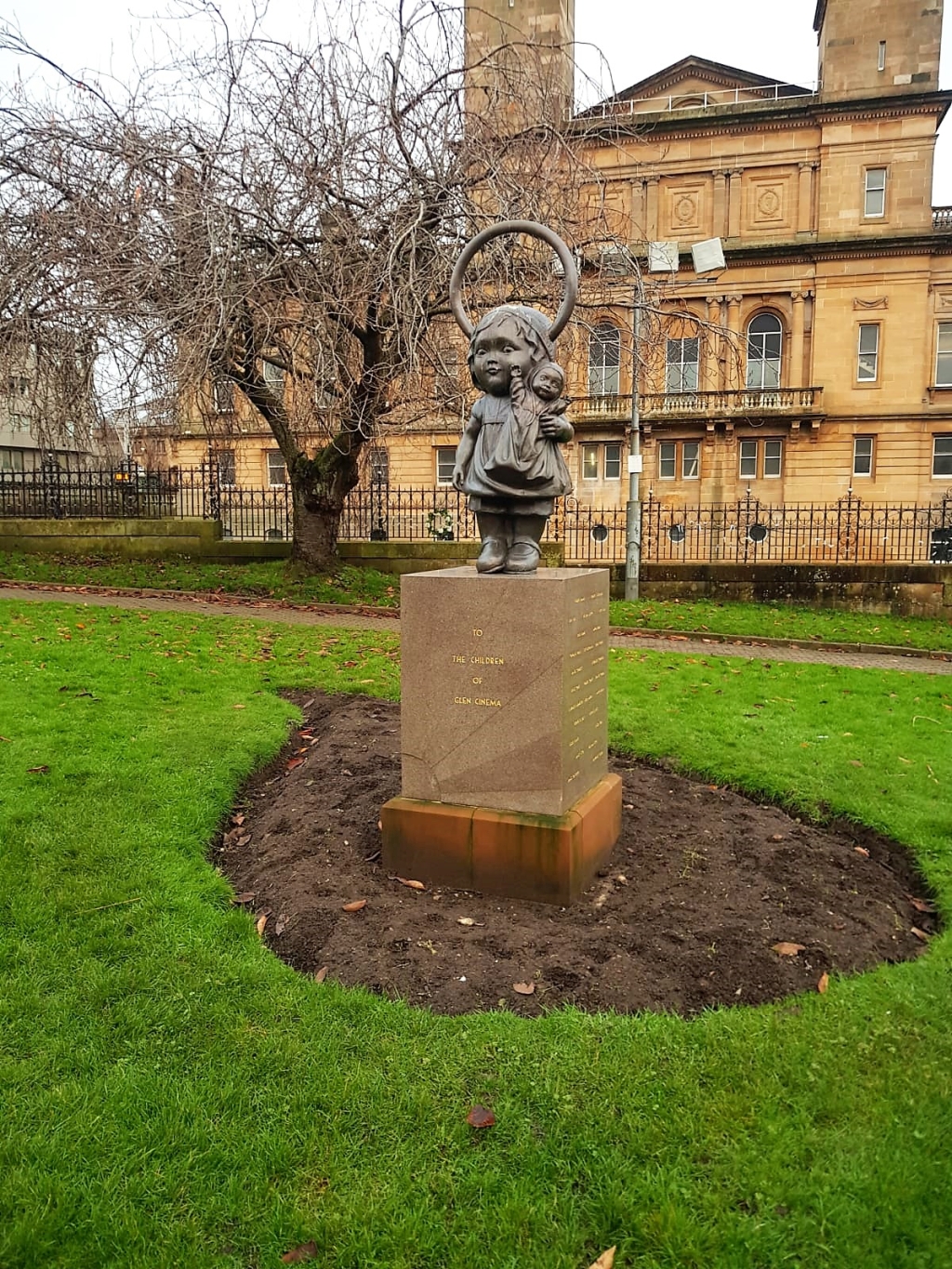
Glen Cinema Tragedy Memorial
Leaving this tragic event behind we continued to Paisley Abbey.
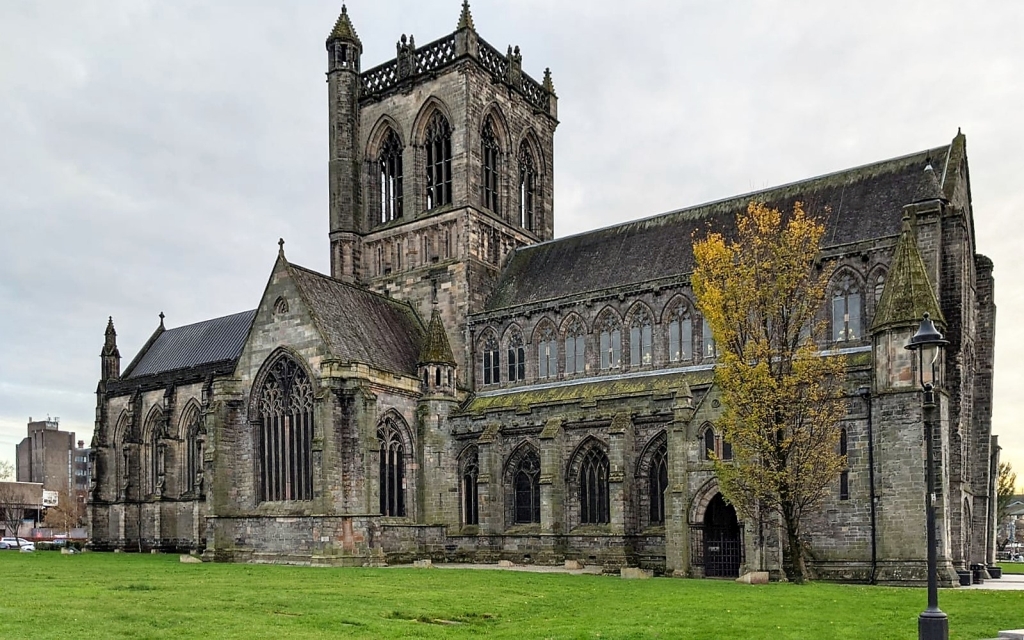
Paisley Abbey
Beside the abbey we saw a statue of Robert Tannahill. Tannerhill (1774 - 1810) a famous poet who composed much of his work while working on his loom. He drew inspiration for some of his poetry and music from Gleniffer Braes, an area he frequently visited. He wrote “Thou Bonnie Wood of Craigielea” the tune of which was later modified to form the music for the Australian song “Waltzing Matilda”. Sadly Tannahill while suffering from a mental illness and after a publisher declined to publish his poems committed suicide in 1810.
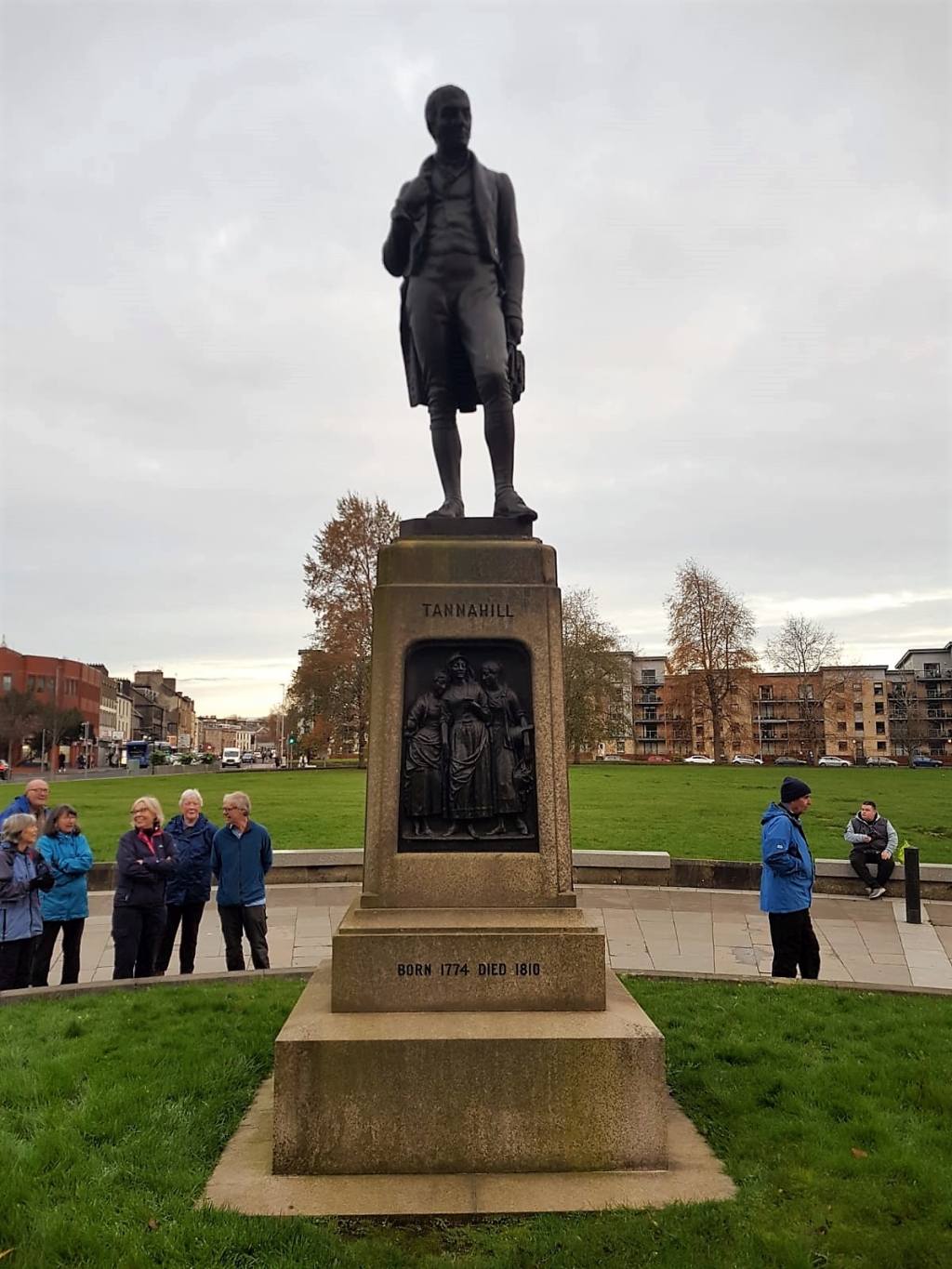
Robert Tannahill’s Statue
Near to Robert Tannahill’s statue was one of Alexander Wilson
Alexnader Wilson (1766 - 1813) was apprenticed as a weaver and worked as a weaver but became politically motivated due to the unfair working conditions imposed on weavers by their employers and wrote several poems which were considered to be inflammatory and libellous. He was in trouble with the law on several occasions and left Scotland in 1794 for a better life in America. While in America he became interested in birds and in 1802 published a book illustrating all the North American birds. This evolved into a nine-volume work illustrating 268 species. He also conducted the first breeding bird census in a friend’s garden. He met the famous American ornithologist Audubon in 1810 and probably inspired Audubon to publish his more famous book of bird illustrations.
This was our final cultural visit of the tour and there only remained a visit to a café for a welcome, and warming, cup of coffee and delicious cake.
A GPX track of our walk from Woodside Cemetery to Paisley Abbey can be viewed by clicking here